Did you know? Cargo ships represent the largest mode of global transport; in China alone, over 18 billion tons of cargo pass through ports annually. The mobile phone in your hand—or the fruit on your dining table—may very well have passed through this very process. So, how does this cargo—measured in units of "billions of tons"—make its way smoothly and efficiently from massive cargo ships to our doorsteps? The answer lies with the rubber-tired gantry cranes working tirelessly behind the scenes. A single crane handles an average of 7,000 tons of cargo per day—equivalent to the capacity of 100 railway cars—and the efficiency and stability of every single lift are critical to the functioning of the entire supply chain.
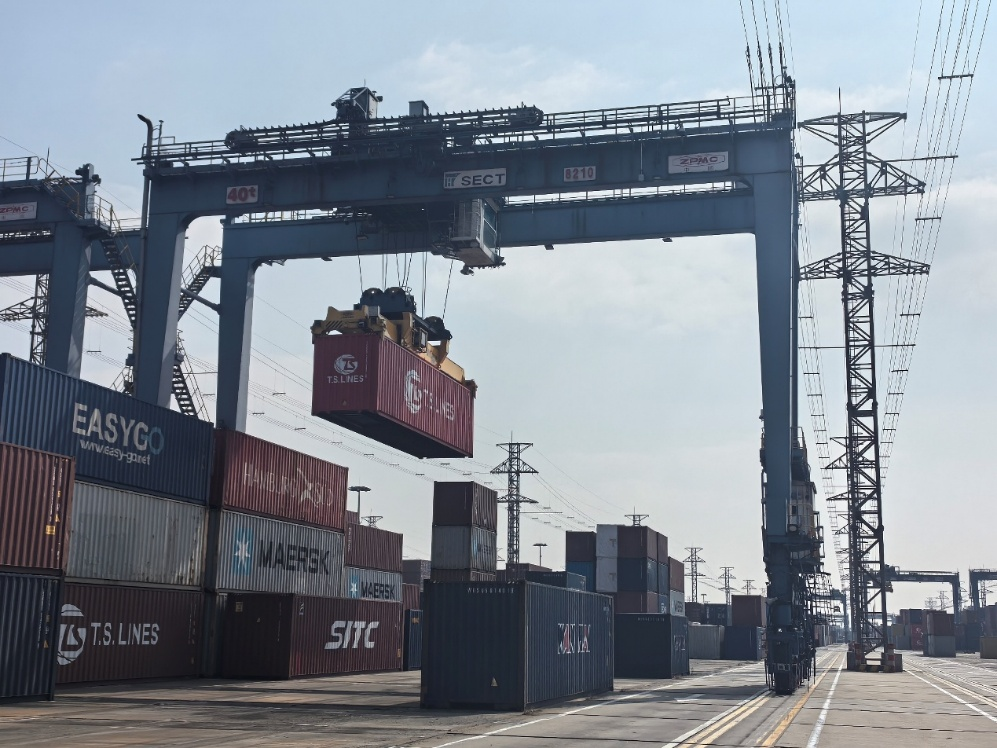
However, communication between the rubber-tyred gantry (RTG) trolley and its spreader has long relied on slip rings or cable reels—akin to performing precision operations while dragging a "rope" that could snap at any moment. This "rope" not only restricts the operational range but also frequently "tangles" or "snaps" amidst the high vibration and intense electromagnetic interference prevalent in port environments:
• With every communication failure: Communication cables frequently disconnect due to vibration and reciprocating motion; this makes it all too easy for spreader control to be lost, placing both safety and operational efficiency under severe strain.
• With every system retrofit: High-altitude cabling and system commissioning often take weeks to complete, while cable costs remain prohibitively high—ranging from over 100,000 for imported cables to 50,000–60,000 for domestic ones—resulting in massive overall investment. A more insidious cost is the loss of operational flexibility. When a port attempts to optimize its workflows or expand its layout, that fixed-length cable effectively becomes an insurmountable "wall."